Deep Plane Facelift: What Is It, Who Is It Suitable For, Benefits and Risks?
As we age, sagging, wrinkles, and loss of facial volume become more visible. These changes are not only related to the skin; they also occur in the deeper supportive layers of the face. Today, thanks to advanced surgical techniques, it is possible to correct signs of aging in a more natural and balanced way.
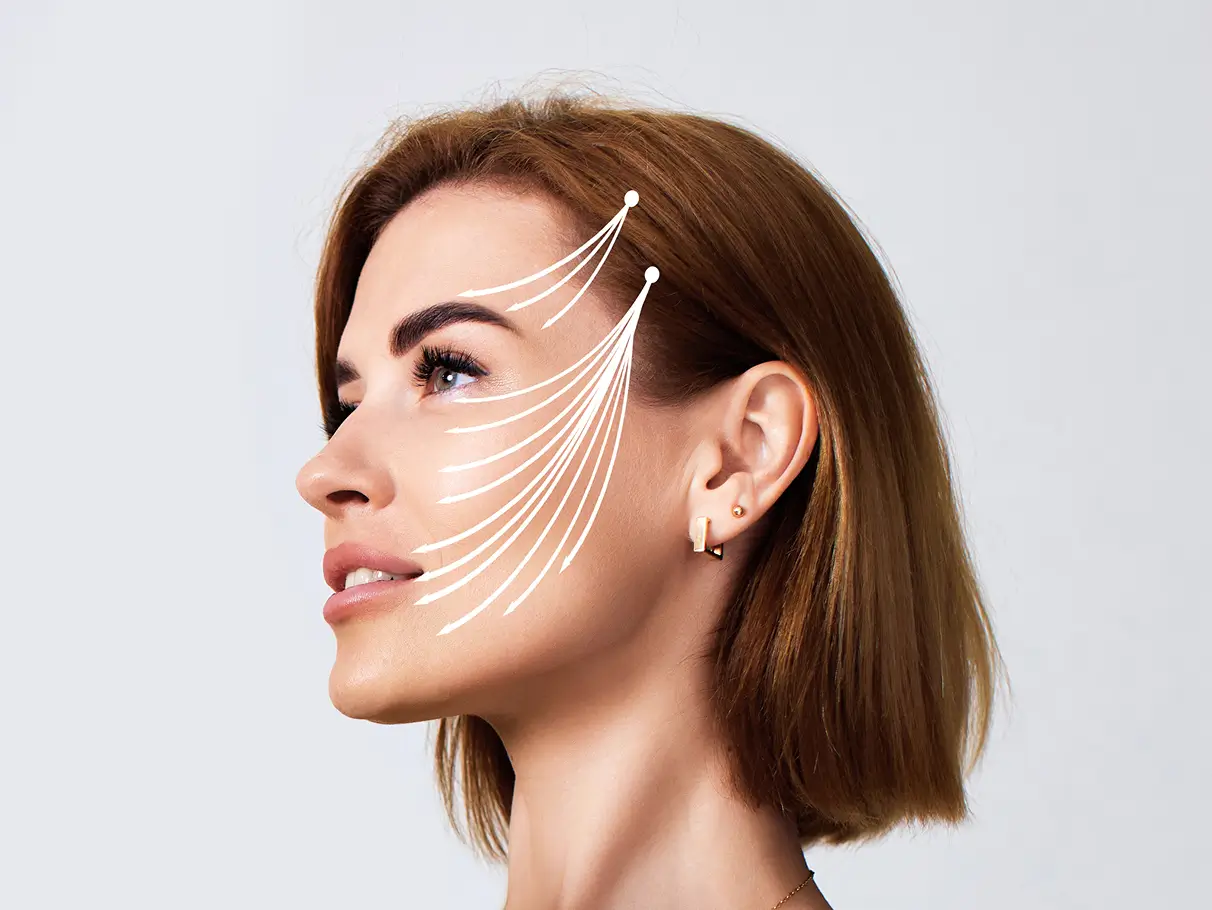
One of the most advanced approaches in facial rejuvenation is the deep plane facelift. Unlike traditional facelift techniques that mainly focus on tightening the skin, a deep plane facelift targets the deeper facial structures to reposition sagging tissues more effectively.
So, what exactly is a deep plane facelift? Who is it suitable for? What are the benefits and possible risks?
What Is a Deep Plane Facelift?
A deep plane facelift is a surgical facial rejuvenation procedure designed to lift and reposition the deeper layers of the face. Instead of simply pulling the skin, this technique works beneath the superficial facial tissue layers to release and reposition sagging structures.
The main goal is to restore a younger, fresher, and more natural facial appearance without creating an overly tight or artificial look.
In a deep plane facelift, the surgeon focuses on areas such as:
Midface sagging
Deep nasolabial folds
Jowls
Jawline definition
Lower face laxity
Neck and facial contour changes
Because the deeper facial tissues are lifted as a unit, the result can appear more harmonious and natural compared to techniques that rely mostly on skin tension.
How Is a Deep Plane Facelift Different from a Traditional Facelift?
Traditional facelift techniques often involve tightening the skin and, in some cases, the superficial muscle layer. While these methods can be effective, excessive skin tension may sometimes lead to a pulled or unnatural appearance.
A deep plane facelift takes a more anatomical approach. It targets the deeper supportive tissues of the face, allowing the surgeon to reposition sagging structures instead of simply stretching the skin.
This difference is important because facial aging usually occurs in deeper layers, not only on the surface. By addressing the actual source of sagging, the deep plane technique can provide a more natural-looking and longer-lasting facial rejuvenation.
Who Is a Suitable Candidate for Deep Plane Facelift?
A deep plane facelift may be suitable for individuals who have moderate to advanced signs of facial aging and want a natural but noticeable improvement.
Good candidates are usually people who experience:
Sagging in the cheeks or midface
Jowls along the jawline
Deep folds around the nose and mouth
Loose skin in the lower face or neck
Loss of facial definition
A tired or aged facial expression
In general, suitable candidates should be in good overall health, have realistic expectations, and should not have medical conditions that may negatively affect healing.
What Are the Benefits of Deep Plane Facelift?
The biggest advantage of a deep plane facelift is that it focuses on natural facial rejuvenation. Since the deeper layers are repositioned rather than the skin being pulled tightly, the outcome can look softer and more balanced.
Main benefits include:
A more natural-looking result
The face looks refreshed rather than stretched.
Improved jawline definition
Jowls and lower face sagging can be corrected more effectively.
Better midface support
Sagging in the cheek area can be lifted, helping restore youthful facial contours.
Longer-lasting rejuvenation
Because the deeper facial structures are repositioned, the result may be more durable than skin-only techniques.
Less tension on the skin
This may help avoid the overly tight appearance associated with some traditional facelift results.
What Areas Can Be Improved with a Deep Plane Facelift?
A deep plane facelift is especially effective for the middle and lower areas of the face. It can help improve:
Cheeks
Nasolabial folds
Marionette lines
Jawline
Jowls
Lower face
Neck contour, when combined with neck lift techniques
For patients with both facial and neck aging, the procedure may be combined with a neck lift for a more complete rejuvenation.
Is Deep Plane Facelift a Non-Surgical Procedure?
No. A deep plane facelift is a surgical procedure. It should not be confused with non-surgical treatments such as fillers, threads, or skin-tightening devices.
Non-surgical procedures may provide temporary improvement for mild aging signs, but they cannot reposition deeper facial tissues in the same way as surgery. A deep plane facelift is designed for patients who need more structural correction.
What Is the Recovery Process Like?
Recovery can vary depending on the patient, the surgical plan, and whether additional procedures are performed. In general, patients may experience swelling, bruising, tightness, and mild discomfort during the first days after surgery.
Most patients gradually return to social life after the initial healing period, but final results continue to improve as swelling decreases.
Following the surgeon’s postoperative instructions is essential for a safe and smooth recovery.
What Are the Risks of Deep Plane Facelift?
Like all surgical procedures, a deep plane facelift has potential risks. These risks should be discussed clearly during the consultation process.
Possible risks may include:
Bleeding or hematoma
Infection
Swelling and bruising
Temporary or permanent changes in sensation
Poor wound healing
Visible scarring
Facial asymmetry
Nerve injury
Anesthesia-related risks
Choosing an experienced surgeon and following preoperative and postoperative instructions can help reduce these risks.
Deep Plane Facelift vs Fillers: Which One Is Better?
Fillers and deep plane facelift surgery serve different purposes.
Dermal fillers can restore lost volume and soften certain lines, but they do not lift sagging facial tissues. A deep plane facelift, on the other hand, repositions deeper structures and corrects facial sagging more comprehensively.
For patients with mild aging signs, non-surgical treatments may be enough. For patients with visible sagging, jowls, and loss of facial structure, a deep plane facelift may provide a more effective solution.
The best option should always be determined after a personalized facial assessment.
How Long Do Deep Plane Facelift Results Last?
The longevity of results depends on factors such as age, skin quality, lifestyle, genetics, and postoperative care. While the procedure cannot stop the natural aging process, it can create a younger facial foundation that ages naturally over time.
Patients who maintain a healthy lifestyle, avoid smoking, protect their skin from sun damage, and follow medical advice may enjoy longer-lasting results.
Why Surgeon Experience Matters
A deep plane facelift is a technically advanced procedure. Since it involves deeper facial layers, surgical experience and anatomical knowledge are extremely important.
The aim should never be to change the person’s identity. A successful facelift should make the patient look rested, refreshed, and naturally younger.
For this reason, choosing the right surgeon is one of the most important decisions in the process.
Conclusion
A deep plane facelift is an advanced facial rejuvenation procedure designed to address sagging, wrinkles, and loss of facial definition at a deeper structural level. By repositioning the underlying facial tissues rather than only tightening the skin, it can provide natural-looking and long-lasting results.
However, it is still a surgical procedure and should be planned carefully. The most accurate treatment approach should be determined after a detailed consultation with an experienced surgeon.
FAQ
What is a deep plane facelift?
A deep plane facelift is a surgical facial rejuvenation procedure that lifts and repositions the deeper layers of the face to correct sagging and restore a more youthful appearance.
Is deep plane facelift better than a traditional facelift?
It depends on the patient’s facial anatomy and aging pattern. Deep plane facelift can offer more natural-looking results for suitable patients because it targets deeper facial structures rather than relying mainly on skin tightening.
Who is a good candidate for deep plane facelift?
People with sagging cheeks, jowls, deep facial folds, and lower face laxity may be good candidates, provided they are healthy and have realistic expectations.
Is deep plane facelift painful?
Patients may feel tightness, swelling, bruising, or mild discomfort after surgery. Pain is usually managed with medications prescribed by the surgeon.
Does deep plane facelift leave scars?
Incisions are usually placed in discreet areas around the ears and hairline. With proper technique and healing, scars often become less noticeable over time.
How long does recovery take?
Initial recovery usually takes a few weeks, but swelling and tissue settling continue to improve over time. The exact recovery period varies for each patient.
What are the risks of deep plane facelift?
Possible risks include bleeding, infection, swelling, nerve injury, numbness, poor wound healing, asymmetry, and anesthesia-related complications. These should be discussed with the surgeon before surgery.
Ready for a natural-looking facial rejuvenation?
Schedule a consultation to learn whether deep plane facelift surgery is the right option for you.
Deep Plane Face Lifting (Derin Plan Yüz Germe)
Deep Plane Facelift Nedir?
Yaşlanma ile birlikte yüzdeki sarkmalar, kırışıklıklar ve hacim kayıpları kaçınılmazdır. Günümüzde gelişen cerrahi teknikler sayesinde, bu etkileri doğal görünümlü bir şekilde düzeltmek artık mümkün. Peki, deep plane facelift (derin plan yüz germe) nedir? Kimler için uygundur? Avantajları ve riskleri nelerdir?
Deep Plane Facelift Nedir?
Deep plane facelift, yüz cildinin sadece üst katmanlarına değil, aynı zamanda cilt altındaki derin bağ dokulara ulaşarak yapılan bir gençleştirme yöntemidir. Klasik yüz germe ameliyatlarından farklı olarak yüzün doğal hatlarını koruyarak, derin dokuları güçlendirmeye odaklanır.
Kimler Deep Plane Facelift İçin Uygundur?
- Ciltte herhangi bir derecede sarkma bulunanlar,
- Yüz germe isteği olan tüm adaylar,
- Ameliyat sonrası iyileşme süresinin uzun olmasını istemeyenler,
- Daha doğal ve genç bir görünüm elde etmek isteyenler.
Ancak ileri derece sarkma veya çok derin kırışıklıklar için cerrahi yüz germe yöntemleri daha uygun olabilir. Bu nedenle, doğru tedavi planını belirlemek için uzman değerlendirmesi şarttır.

Deep Plane Facelift Uygulama Süreci ve İşlem Detayları
Dr. Fatih Ceran deep plane facelift uygulamasını genellikle genel anestezi altında yapmaktadır ve ameliyat yaklaşık 3-4 saat civarında sürmektedir. Eğer ekstra işlemler yapılacaksa operasyon süresi buna paralel olarak uzayacaktır.
İşlem sırasında yüzün doğal hatlarını bozmayacak şekilde hareket edilir; bu sayede sonuç hem etkili hem de doğal görünür. Operasyonun ardından genellikle hafif bir şişlik ve hassasiyet olur ancak bunlar kısa sürede geçer.
Deep Plane Facelift’in Sağladığı Avantajlar
- İyileşme sürecinin kısa olması,
- Yüzde doğal bir gençleşme ve lifting etkisi,
- Kolay uygulama ve anında gözle görülür sonuçlar,
- Kollajen üretimini tetikleyerek cildin uzun vadede güçlenmesi,
- Cerrahi izin çok belirgin olmaması,
- Yaşlanma etkilerinin geciktirilmesi.
Deep Plane Facelift Sonrası Dikkat Edilmesi Gerekenler
İşlem sonrasında cerrahın önerdiği bakım rutini çok önemlidir. Bazı genel öneriler şunlardır:
- İyileşme sürecinde yüzünüzü temiz ve nemli tutun,
- Aşırı güneş ışığından uzak durun, yüksek koruma faktörlü kremler kullanın,
- Herhangi bir olağandışı ağrı, kızarıklık veya enfeksiyon belirtisinde doktorunuza başvurun.
Deep Plane Facelift’in Olası Riskleri Nelerdir?
Her estetik uygulamada olduğu gibi, deep plane facelift’in de bazı riskleri vardır. Bunlar genellikle minimal ve geçicidir, ancak bilmekte fayda var:
- Enfeksiyon riski: İşlem sonrası hijyene dikkat edilmezse ortaya çıkabilir.
- Hafif morarma ve şişlik: Özellikle ilk günlerde görülebilir, genellikle birkaç gün içinde kaybolur.
- Asimetri: Yüzün iki tarafında hafif farklılıklar oluşabilir, nadiren kalıcı olabilir.
- Geçici sinir tahrişi: Nadiren yüz bölgesinde uyuşma veya karıncalanma olabilir.
- Bu risklerin en aza indirilmesi için mutlaka deneyimli ve alanında uzman cerrahlar tercih edilmelidir.




Doç. Dr. Fatih Ceran ile Deep Plane Facelift İle Doğal Gençleşme
Yaşlanma sürecini durdurmak mümkün olmasa da, doğru yöntemlerle daha genç ve dinamik bir görünüm kazanmak hiç zor değil. Deep plane facelift, doğal ifadenizi bozmadan, minimal müdahaleyle cildinizi canlandırmak isteyenler için ideal bir seçenek. Siz de yüzünüzdeki yaşlanma belirtilerini hafifletmek ve kendinizi daha iyi hissetmek istiyorsanız, Doç. Dr. Fatih Ceran’ın deneyimi ve uzmanlığıyla size en uygun tedavi planını birlikte oluşturabilirsiniz. Gençleşmenin yeni yolunu keşfetmek için iletişime geçin!
Doç. Dr. Fatih Ceran’dan randevu almak veya deep plane facelift (derin plan yüz germe) estetik cerrahi operasyonuyla ilgili detaylı bilgi edinmek için aşağıdaki iletişim kanallarını kullanabilirsiniz:
İletişim Formu: https://drfatihceran.com/iletisim-randevu-formu
Telefon / WhatsApp: +90 552 313 02 96 Instagram: @dr.fatihceran